

15 Cultural Differences between Spain and Italy

Many folks from Northern Europe and Anglo-Saxon countries often see Southern Europe as a blend of beautiful scenery, healthy food, lovely buildings, and sunny weather. Thus, they tend to lump Italy and Spain together.
But in this post, we’re going to look beyond the basics. We won’t just discuss obvious facts like “Spain speaks Spanish, and Italy speaks Italian.”
Disclaimer: these are my thoughts, and I’m sorry if readers from Spain or Italy find them offensive. No hard feelings.
Before we start, let me say that Spain and Italy are lovely places to visit. They have lots of connections in history, art, and culture. Italians and Spaniards are alike in many ways. But our focus here is on the differences in their cultures (that are important to understand and respect).
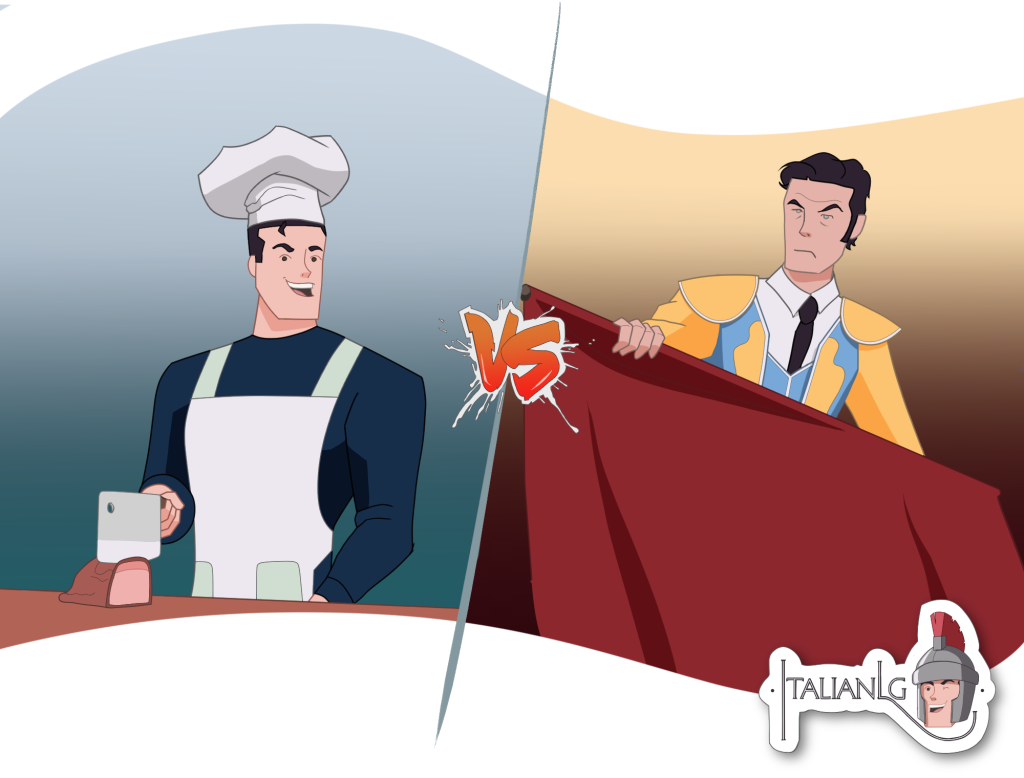
You might know some of these differences, but there are probably others you haven’t heard about. Let’s discover them together!
1. In Italy, the concept of motherhood carries more weight than it does in Spain!
In Italy, the mom, also known as “mamma,” plays a crucial role in the family. She’s like the backbone, holding everything together. Moms in Italy typically run the household, handle the money, and bring order to the family. Because of this, society highly respects them.
This robust family bond means that children in Italy take longer to move out of their parents’ homes. Even when they do, they often choose to live close to their parents.
In Spain, the role of women in family life isn’t as noticeable, and Spanish children usually don’t face the same challenges when leaving home.
2. Italians place more emphasis on the aesthetics of things than Spaniards
For someone from Spain, if the coffee tastes good, they say “Bueno” (good). But Italians describe it as “Bello” (beautiful). At a bar, it’s normal to hear someone order a “bel cappuccino.” Italians appreciate things that look good. You can see it in everything they do, even how they speak.
3. Italians try harder than Spaniards to look good!
Italians care about looking good. It’s not just about wearing nice clothes; it’s more about avoiding awkward situations, fitting in, and having a good image.
In Spain, it’s not as strong. People dress well, and nobody likes feeling embarrassed. But it’s not quite the same.
For those acquainted with China’s culture, it compares to what they call ‘Face’ (mianzi). We don’t talk about it much in the West. It means ‘honor,’ ‘reputation,’ and ‘respect.’ In China, having a good reputation is very important in social, political, and business situations. It can determine if a deal goes well or not.
4. Italians are more socially conservative!
Spain became the third country globally to make same-sex marriage legal in 2005. In 2013, the Pew Research Center said Spain is the most tolerant country for homosexuality.
People might think Spain and Italy are conservative (due to their link to Catholicism), but that’s more accurate for Italy.
Spain was an early adopter of same-sex marriage, while Italy only approved civil unions in 2016 (and it caused a lot of backlash and disapproval around the country). Up until this day, Italy has held a stand against legalizing same-sex marriage.
5. Spaniards are harder partiers than Italians!
Spaniards drink more alcohol than Italians. Both follow the European tradition of drinking with meals, but Spain has a higher alcohol consumption and is more accepting of it.
In Spain, the average person drinks about 11.2 liters per year, similar to the UK at 11.6 liters. In Italy, it’s much lower at 6.9 liters per person per year, the lowest in Europe. In Italy, public drunkenness is frowned upon.
Spanish youth engage in “botellón,” a drinking activity that makes British binge drinking look modest.
Spain attracts party tourism in places like Barcelona, Ibiza, Alicante, Malaga, Madrid, and Marbella. In contrast, Italy’s most sought-after tourist destinations are quieter. Compare Lake Como, Venice, the Amalfi coast, Puglia, Verona, etc, with the Spanish cities mentioned above. You’ll understand what we mean.
6. Italian food is more widespread worldwide than Spanish food!
Spanish and Italian foods are exquisite. Both offer a wide range of fresh products from different regions.

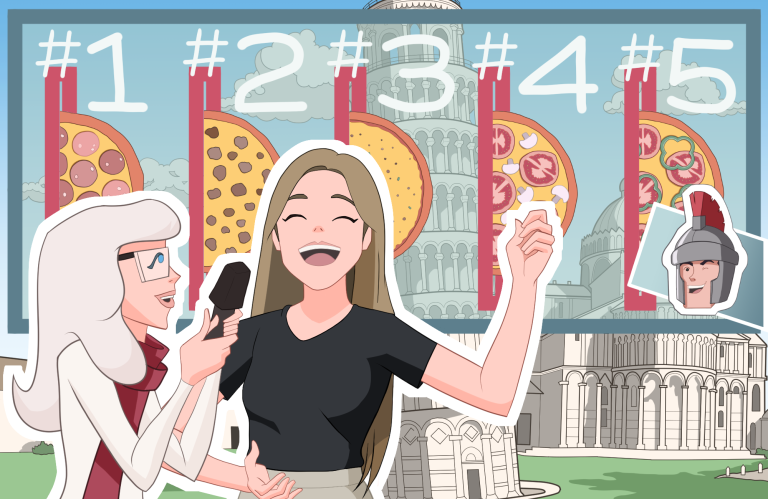
Italian cuisine, in particular, is chart-topping worldwide. Famous dishes like pasta and pizza are known everywhere. You can find Italian restaurants all over the world! Spanish food is also recognized worldwide. However, Italians may have an advantage in this field.
7. Italian fashion has more impact worldwide than Spanish fashion!
Spanish and Italian cultures appreciate fashion and staying updated with the latest trends. However, they have different perspectives on aesthetic appeal and glamour.
Design-wise, Italy has a superior reputation compared to Spain. Renowned brands like Gucci, Versace, Armani, Prada, Dolce & Gabbana, Valentino, and Roberto Cavalli showcase the global popularity of Italian fashion.
Fashion Weeks in Madrid and Milan highlight the significance of these cities in the fashion world. Spanish fashion boasts fantastic designers and well-known brands. But Milan is widely acknowledged for its undeniable elegance. Milan is not just the fashion capital of Italy; it’s a major fashion center worldwide.
8. Spaniards are strict, while Italians are more willing to compromise.
Spaniards and Italians approach tasks differently. Spaniards tend to be strict, decisive, and highly practical. In contrast, Italians prefer negotiation and are more inclined towards compromise. They seldom provide a straightforward yes or no answer, preferring to explore various options. This characteristic leads us to our next point: Italy has one of the highest numbers of political parties in Europe.
9. There are way more political parties in Italy than in Spain!
The political system in place in Italy, which uses a proportional representation (PR) model, involves a lot of political parties. Another feature of Italy’s politics is the frequent changes in government.
In contrast, Spain has been mainly governed by two major parties since the establishment of democracy, although this changed in the last election.
However, it’s essential to note that the effectiveness of the Italian and Spanish systems is debatable.
10. Spain has a larger land area than Italy, but its population density is much lower.
Spain covers an area of 505,990 square kilometers, almost twice the size of Italy, which is 301,231 square kilometers. However, Italy has a larger population than Spain.
Italy had 59.07 million residents in 2021, while Spain had 47.33 million.
In Spain, many people live in big cities like Madrid, Barcelona, Seville, or Valencia, or along the coast. While in Italy, although most Italians also live in big cities, a higher proportion than in Spain live in small towns or smaller cities.
11. Italy is more polarised.
There are both affluent and less affluent areas in Spain. But you don’t see a clear-cut divide like a “very wealthy north and a noticeably poor south,” as happens in Italy.
12. Italy is more divided.
Even though there are significant regional distinctions in Spain (and independence movements), Spain has been a united country for over 500 years.
Italy, on the other hand, has been unified for 150 years. The variations in food, outlook, and language are noticeable. In the novel “My Beautiful Friend,” set in post-war Naples, the significance of dialect is emphasized (if people speak in Italian) and how infrequently people travel. Spain has exceptions like Catalonia and Basque, but they are exceptions.
13. The Italian way!
Spaniards enjoy being adventurous and often look for quick ways to get things done. On the other hand, Italians typically show less regard for rules and prefer to adjust them to their liking.
For instance, when VAT saw the light, a book titled “100 Ways Not to Pay VAT” quickly emerged. Thus, it gave rise to the famous saying: “Doing something the Italian way.”
14. Italians can’t understand Spanish, and Spaniards can’t understand Italian without studying!
Even though Italian and Spanish are similar because they’re Latin languages, you can’t understand them easily without learning them first. To speak either, you need to spend time learning and practicing. That’s why public figures often end up using an interpreter.
15. Spain is more visited by international tourists than Italy!
According to the World Tourism Organization, Spain was the third most visited country in the world in 2021, with 31.7 million tourists. France secured the top spot, followed by Mexico. Turkey claimed the fourth position, and Italy was the fifth most visited country, welcoming around 26.3 million international tourists for leisure and vacations.
Wrapping Up!
Did you know any of these cultural characteristics? Did any of these differences shock you? Which country do you relate to more?
The joy of exploring each country comes from understanding its customs and traditions and appreciating what makes them distinct and extraordinary.
Italy and Spain are both splendid countries worth visiting. And there’s so much to see that I suggest you take your time to explore every corner!




I have gone to Italy and Spain. I enjoy both southern European countries. Their weather is great. And the social atmosphere is warmer than in my country.
But I prefer Spain over Italy. Trying to decide was not easy.
Thanks for sharing your preferences. Both countries are similar and different in many ways!
Spain is known for flamenco and tapas, while Italy is famous for opera and pasta.
That’s an interesting point. Those are definitely strong symbols of each culture. And there is so much more to discover about both.
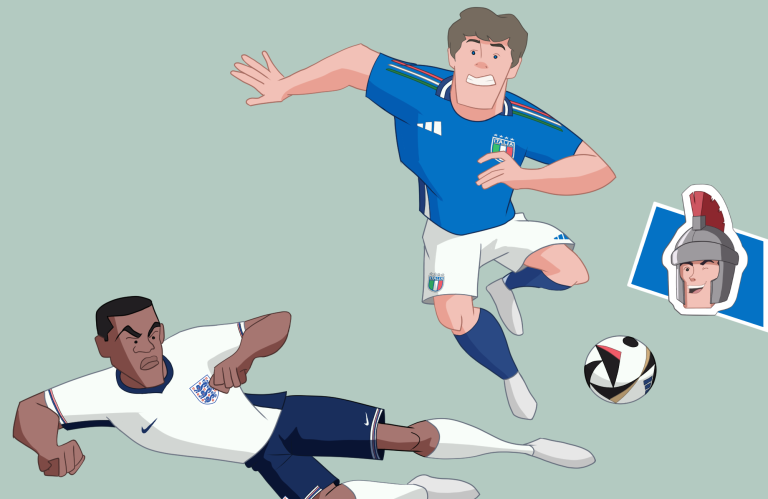
I want to share that I have also spotted differences between Spanish and Italian soccer players. I love football and it would be impossible not to talk about it. Spanish players focus a lot on quick passes and controlling the game, while Italian players are known for their strong defense and smart tactics. Both are great to watch, but they definitely have their own unique style!
That’s a great example of how cultural differences manifest in unexpected ways. The differences in their soccer styles are a perfect illustration.
As a Spanish person, I think the biggest difference between Italians and Spanish people is how they express themselves. Italians seem more animated and emotional when they speak, using lots of hand gestures and excitement. Spanish people can be passionate too, but in a more relaxed and laid-back way. It’s really interesting to see how similar yet different we are!
You’ve hit the nail on the head! The contrast between the animated Italian style and the more relaxed Spanish approach is so noticeable. And you’re right, both cultures are passionate, just in different ways. It adds to the richness of the Mediterranean experience.
I prefer Italy!
Thumbs up!